
Moringa (Sohanjna) Powder: What's in the Leaf and How to Choose a Good One
23 October 2026 · MZ Foods
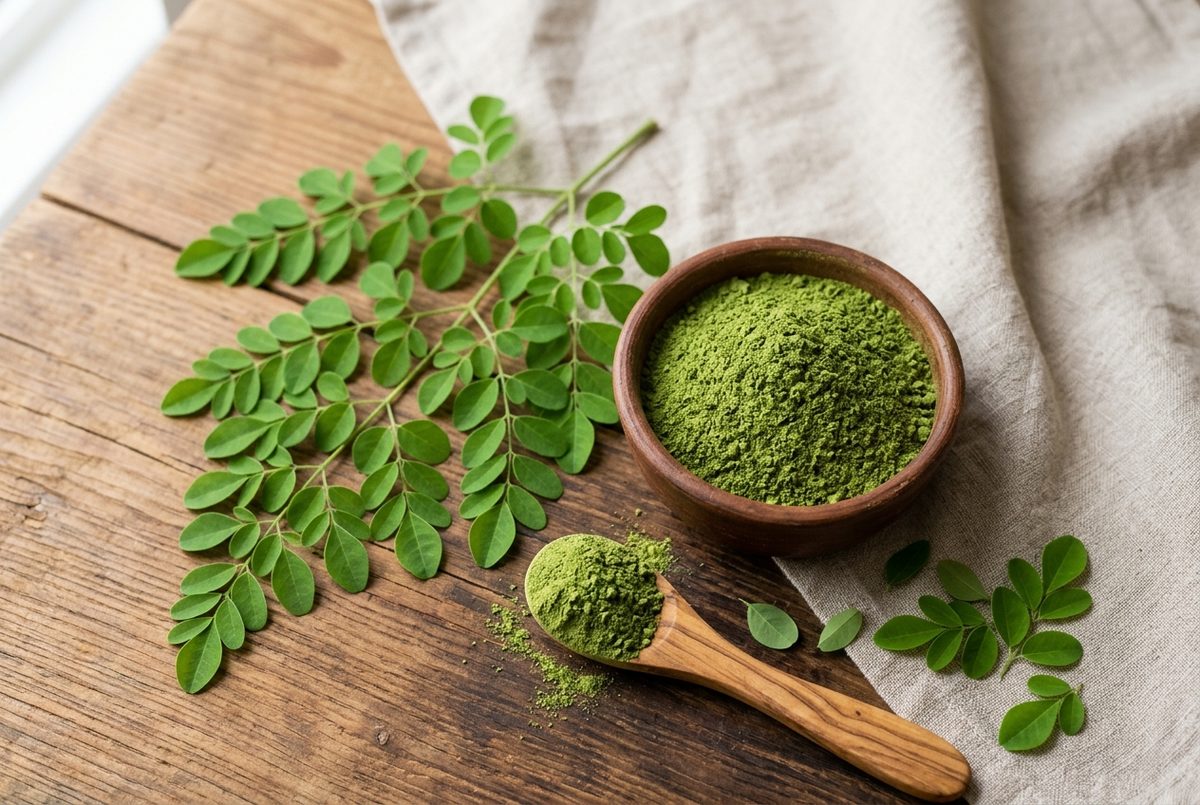
Sohanjna is no exotic superfood flown in from abroad. The tree grows in courtyards and along roadsides across Punjab and Sindh, and many of us have eaten its pods and leaves cooked into a salan at Nani's house. Today the same leaf is sold everywhere as moringa powder, from glossy imported tubs to loose green powder in a plastic bag at the pansar shop.
So what is moringa, what is actually in the leaf, and how do you tell a good moringa powder from a poor one? This guide also explains why we blended it with ispaghol to make Mori Zen.

What is moringa (sohanjna)?
Moringa (Moringa oleifera) is a fast-growing tree native to the foothills of the Himalayas, and it is widely grown across Pakistan and India. In Urdu and Punjabi it is called sohanjna (سہانجنا). In English it is sometimes called the "drumstick tree" because of its long, thin pods.
Almost every part of the tree is eaten somewhere in South Asia. The pods go into curries, the flowers are cooked as a vegetable in spring, and the small round leaves are cooked fresh or dried and ground into a fine green powder. Moringa powder is simply the dried leaves, ground.
What is in a moringa leaf?
Moringa leaves are one of the most researched leafy plants in food science. A 2022 scientific review of moringa leaf composition reported that the leaves contain:
- Protein, with around 27–29 g per 100 g of dried leaf or leaf powder, including all of the essential amino acids;
- Minerals, especially calcium and iron, which are much more concentrated in the dried leaf than in the fresh one;
- Vitamins, including provitamin A (carotenoids) and B vitamins;
- Plant compounds such as polyphenols and flavonoids.
The same review is honest about the limits. Many of the effects you read about online come from lab and animal studies, and human research on how well the body absorbs these nutrients is still limited. That is why we talk about moringa as a traditional green leaf for your daily routine, not as a cure for anything.
Premium moringa vs street-shop moringa: what is the difference?
Moringa powder is easy to make and easy to make badly. Here is what separates a good powder from a poor one.
| Loose / unbranded moringa | Quality packed moringa | |
|---|---|---|
| Colour | Dull olive, brownish or yellowish | Fresh, even green |
| Smell | Musty, flat or like old hay | Fresh and leafy, like dried herbs |
| What is ground | Often leaves together with stems and twigs | Leaf, with stems removed |
| Drying | Often in open sun, on the ground or the roadside | Controlled drying to protect colour and nutrients |
| Storage | Open sack or thin plastic bag, exposed to light and air | Sealed, airtight container |
| Label | No ingredients, no date, no brand | Ingredients, net weight, dates and brand contact |
Light, heat and air break down the green colour and the delicate compounds in the leaf. The research review notes that processing, storage and high heat reduce the leaf's carotenoids and polyphenols. A brown, musty moringa powder has usually been dried badly or stored too long. It may be cheap, but you are not getting much of the leaf you paid for.
Why we blended moringa with ispaghol

Plain moringa powder has a strong, grassy taste that many people find hard to drink every day. Stirred into water, it also tends to float and clump. Ispaghol (isabgol husk) is the daily fibre almost every Pakistani kitchen already keeps, and it turns the drink smooth and easy to finish.
So Mori Zen is exactly that: moringa leaf powder and ispaghol husk, ready-blended in one sealed jar. It has two ingredients and nothing else, so there are no sugars, flavours or fillers.
How to use Mori Zen

- Take one tablespoon of Mori Zen.
- Stir it into a glass of water or milk.
- Drink it straight away, before the ispaghol thickens, then follow with another glass of water.
Mori Zen is made for the morning: subah ka pehla glass, before chai and breakfast. Its evening partner is Ashwa Zen (ashwagandha + ispaghol). Together they make the Zen Series.
Who should check with a doctor first
Please speak to your doctor before using Mori Zen if you are pregnant or breastfeeding, take regular medication (for example for blood sugar, blood pressure or thyroid), or have a medical condition, including any condition affecting swallowing or digestion. Always take ispaghol with plenty of liquid and keep it a couple of hours apart from any medicines.
Storing moringa powder
- Close the lid tightly after every use. Air and humidity dull the colour quickly.
- Keep the jar away from sunlight and the stove.
- Use a dry spoon so the ispaghol does not clump.
Frequently asked questions
What is moringa called in Urdu?
Moringa is called sohanjna (سہانجنا) in Urdu and Punjabi.
What does Mori Zen taste like?
It tastes light and leafy. The ispaghol makes it smoother and milder than plain moringa powder.
Why is good moringa powder green?
Green colour shows that the leaves were dried carefully and protected from light and air. Brown or yellow powder is usually old or badly dried.
Is Mori Zen a medicine?
No. It is a food supplement made from two traditional ingredients. It is not intended to diagnose, treat, cure or prevent any disease.
Order Mori Zen online with Cash on Delivery anywhere in Pakistan, or message us on WhatsApp at 0326 5330111.
Sources
- Kashyap P. et al. (2022). Recent Advances in Drumstick (Moringa oleifera) Leaves Bioactive Compounds: Composition, Health Benefits, Bioaccessibility, and Dietary Applications. Antioxidants, 11(2), 402.
- MedlinePlus (US National Library of Medicine): Blond psyllium
This article is for general information only and is not medical advice. If you have a medical condition, are pregnant or take medication, consult your doctor before using any supplement.
Shop MZ Foods
Zen Series, Ispaghol, honey and masala with Cash on Delivery.